I am reminded of a story I read in childhood about a lion cub raised among goats. Orphaned at birth, he was adopted by a young girl who fed him goat’s milk and raised him alongside her herd. Over time, the lion cub began behaving like a goat—eating grass, feeling fearful, and never realizing his true nature.
One day, he got lost in the jungle and instinctively ran in fear when he saw a wolf. But to his surprise, the animals fled from him. This unfamiliar experience sparked a subtle awareness within. As he wandered deeper into the forest, he noticed the same reaction from other animals. Eventually, he encountered a pride of lions feasting on a kill. Something awakened inside him—a primal desire. Acting on it, he hunted a calf and, for the first time, felt the exhilaration of being what he truly was. From that moment on, the goat-like lion transformed into the king of the jungle.
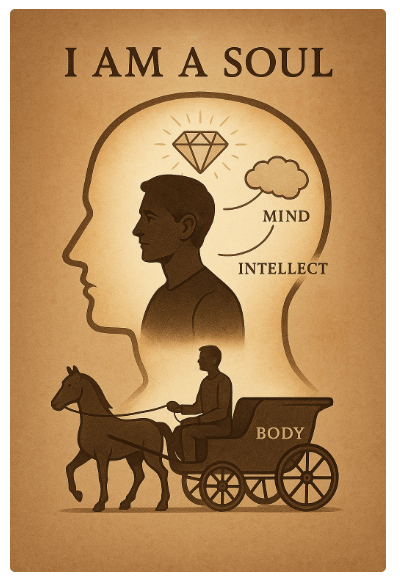
This story echoes our own journey. Like the lion, we are born fearless and whole. Yet, from early childhood, society conditions us—instilling beliefs about who we are, what we should be, and how we should behave. Over time, we learn to seek validation from others, shaping our identity through approval and comparison. This deep conditioning clouds our true nature, replacing inner confidence with doubt. The voice of our soul grows faint, and we begin to act more like the goats around us—fearful, uncertain, seeking acceptance.
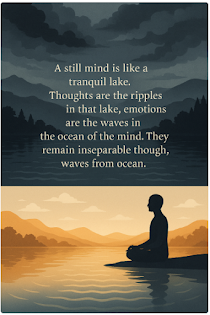
The external world we perceive is only a reflection of our inner state. When our inner world is in chaos, the world around us feels threatening. Our thoughts and emotions ripple like waves on a lake, disturbing the stillness within. As Confucius said, the human mind is more unpredictable than nature itself.
To return to our true nature—the fearless lion within—we must still the mind. Through awareness and meditation, we can observe the restless flow of thoughts and emotions, and gradually reconnect with the deep peace and clarity that lies beneath. A calm mind, like a tranquil lake, reflects reality clearly and completely. If you able to observe the anatomy of the mind, and observe the flow of thoughts you will realize that how our mind is like constantly under the wave/ripples of emotions. You will realize that mediation is the only remedy to bring a still mind
Meditation is not an escape; it is the only way to rediscover the self we’ve forgotten.