Tag: Don Miguel Ruiz

  • The Third Agreement: DO NOT Make Assumptions

    There is a quiet violence in the assumptions we carry. They arrive unannounced, dressed as certainty, and we rarely think to question them. Don Miguel Ruiz, in The Four Agreements, names this clearly in his Third Agreement: Don’t make assumptions. And the more I sit with it, the more I see how much of our suffering — the small daily ache and the larger ruptures — begins here.

    The trouble with an assumption is that we mistake it for truth. We could swear it is real. We decide what someone meant, what they felt, what they intended, and then we react to the story we invented rather than to the person in front of us. We misunderstand, we take it personally, and we manufacture a whole drama for nothing. Ruiz is unsparing about this: most of the sadness we have lived was rooted in assuming, and then taking that assumption to heart.

    What strikes me most is why we do it. The mind hates an open question. It needs to explain, to justify, to fill the silence with an answer — and it does not much care whether the answer is correct. Any answer makes us feel safe. So we guess, and we believe our guess, and then we defend it as though our life depended on it.

    Why we stop asking

    Here I find myself looking back at my own childhood. Like many of us, I grew up in a world where asking too many questions was quietly discouraged — curiosity made the adults uncomfortable, and so we learned to stop asking and start assuming instead. That habit does not leave you when you become an adult. It hides. It becomes second nature.

    When I later came to understand these Toltec ideas, something clicked. I realised that nearly every assumption I made came from one of two failures: either I hesitated to ask the question, or I never developed the communication to draw out a real answer. The fix was never in thinking harder. It was in asking.

    So I made it a practice. I refuse, as best I can, to take things personally, and I refuse to let an assumption stand where a question would do. When I do not understand, I ask — again and again — until the picture is clear. It is uncomfortable at first. Asking can feel like exposure. But it is far less costly than the suffering an unspoken assumption creates.

    The courage to communicate

    This is why I have become such an advocate for clear, transparent expression. With my family, my friends, my peers, I encourage the same: say what you mean, ask what you don’t know, make your wants visible rather than hoping to be read like a book. So much heartbreak in relationships comes from the silent expectation — you should have known — when the truth is, we never said.

    Ruiz reminds us that everyone has the right to ask, and everyone has the right to answer yes or no. There is freedom in that simplicity. Find your voice to ask for what you want. Once you hear the answer, you no longer need to invent one.

    Clear communication is not a small thing. Ruiz believed that if all of us could speak this way — without poison, without assuming — there would be no wars, no needless conflict. I believe it too, at the scale of a single conversation. The word becomes impeccable when it stops carrying our inventions.

    The seed is the idea. The transformation is the action — repeated until it becomes who you are.


    So here is my question for you, and I’d love your honest reflection:

    When was the last time an assumption cost you something — and what question, asked in time, might have saved it?
  • The 2nd Agreement- DO NOT Take Anything Personally !

    Refer to my previous blog (3 blogs down the thread) — I had started writing about the Four Agreements of life inspired by Toltec wisdom, where I wrote about the 1st agreement: “Be impeccable with your word.” I was recently not at my best of writing, and hence delayed by several months. Here goes the 2nd wisdom: “Don’t take anything personally.” Interestingly, this also ties beautifully into my earlier post “Is This Worth My Roar??” — both, in their own way, ask us to step back before reacting to the world’s noise.


    Of all four agreements, this one might be the most liberating — and the hardest to actually live by. The idea is simple: whatever someone says or does is a reflection of their inner world, their wounds, their fears, their agreements with life — not a statement of truth about you. And yet, almost everything in how we’re raised teaches us the opposite. We’re trained to believe that other people’s reactions to us mean something about who we are.

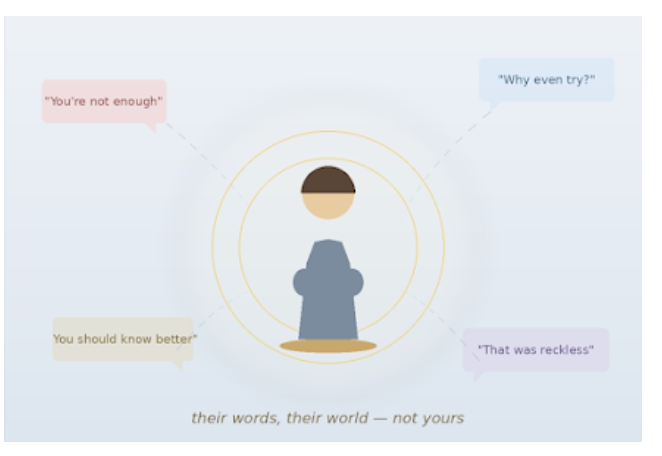
    Let’s take a hypothetical exmaple through my own lens…. 🙂  Imagine you’ve recently made a significant life decision — perhaps stepping away from a stable, well-paying path to pursue something that feels more aligned with who you are. A close relative hears about it and says, with quiet disappointment, “I just don’t understand why you’d give up something so secure. After everything you worked for.” The words land heavily. You might feel a wave of doubt creep in — maybe I am being reckless, maybe I really am throwing something away.

    But pause for a moment and look at where that comment is coming from. That relative may have grown up in a time or circumstance where security was everything — where stability wasn’t a choice but a survival necessity. Their reaction isn’t really about your life or your path; it’s about their relationship with fear, shaped by their own history and the agreements they made with life decades ago. When they look at your decision, they’re not seeing you clearly — they’re seeing it through the lens of their own unresolved anxieties. It’s their movie, their script, their fears playing out — you simply happened to be the screen they projected it onto.

    This is where the depth of the second agreement really lives — in recognizing that everyone is dreaming their own dream, living inside their own mind, shaped by their own domestication. When someone reacts to you, they are reacting through the lens of every agreement they’ve ever made about how the world works. Their words are a mirror of their beliefs — not a window into your truth.

    Here’s another hypothetical: a close friend forgets to check in during a time when you needed support. The old reflex says, they don’t care about me, I must not matter to them. But what if, instead, you considered that they’re going through something overwhelming in their own life right now — and their absence is about their own bandwidth, not your value to them? This doesn’t mean you ignore patterns or stop having honest conversations. It simply means you stop manufacturing suffering out of someone else’s distraction.

    What’s beautiful about this agreement is that it applies just as much to compliments as criticism. If someone praises a decision you’ve made — “you’re so brave for doing this” — that, too, is their perception, their dream. You don’t need it to feel whole. And if someone doubts you, you don’t need to crumble or justify yourself endlessly. Either way, your sense of self stays rooted in something steadier than other people’s opinions.

    When you genuinely practice this, something shifts. You stop bracing for impact in conversations, especially with family. You stop replaying things people said years ago, wondering if they were right about you. You become less reactive, more spacious — able to love people without needing them to validate your path, and able to hear hard truths without losing your footing.

    Next time, I’ll continue with the 3rd agreement — “Don’t make assumptions” — which builds naturally on this one.  Until then, may you walk through your relationships a little lighter, carrying only what’s truly yours. 🙂Share

    Labels

  • The First Agreement: Be Impeccable with Your Word

    In my previous blog,( https://abhijit1981.wordpress.com/2025/07/30/the-smokey-mirror-understanding-the-mind-through-toltec-wisdom/)  I mentioned that I would be exploring the Four Agreements of Life inspired by Toltec wisdom. Today, I begin with the very first — and perhaps the most powerful — agreement: Be impeccable with your words.

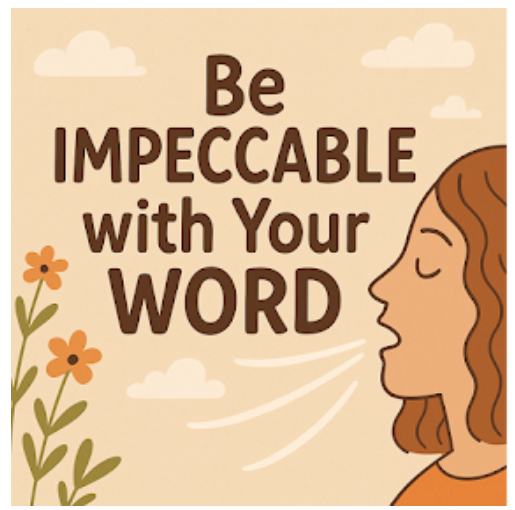
    There is one agreement that can transform your entire life: be impeccable with your word. It sounds simple, but it’s one of the hardest habits to master.

    Words are not just sounds; they are seeds. When planted in the mind, they grow into beliefs and shape reality. A careless word can shatter confidence. An encouraging word can spark a lifetime of courage.

    I learned this the hard way. As a child, I loved to sing. I sang around the house with joy, filling every room with my voice. One evening, my father came home exhausted after a long day. With a pounding headache, he snapped: “Stop it! Your voice is terrible.”

    He didn’t mean it — he was simply tired. But I believed him. From that moment, I stopped singing. I avoided music classes, I refused to sing at school, and even speaking in front of people became difficult. One sentence planted a seed of fear that grew for years.

    That’s the power of words misused. They cast spells we carry long into adulthood.

    But words can also heal. Years later,  a teacher encouraged me: “You have a strong voice — you just need to use it.” Those words broke the old agreement I had made with myself. Slowly, I began speaking up again. Confidence returned, all because someone chose words of truth and kindness. Now my freinds and realtives know my singing talent 🙂 

    Being impeccable with your word means speaking with love and honesty — to others and to yourself. It means breaking the habit of self-criticism. Instead of “I’m not good enough,” choose “I am learning. I am capable. I am enough.”

    It also means being mindful of how we speak to others. Gossip, lies, and harsh criticism poison relationships. But encouragement, gratitude, and honesty create connection and love. Every word either builds or destroys.

    This agreement isn’t easy. Our world is full of negativity, and we’ve been trained to speak carelessly. But each time we choose words of love instead of fear, we plant better seeds — seeds that grow into peace, confidence, and joy.

    Imagine a world where children grew up hearing, “You are strong. You are loved. You are enough.” Imagine relationships grounded in encouragement rather than criticism. Imagine the self-belief that would blossom in each of us.

    That vision begins with one choice: to be impeccable with your word.

    Today, I choose to use my words to heal, not to wound. To encourage, not to destroy. And when I stumble, I’ll try again.

    Because this one agreement has the power to change everything.

  • The Smokey Mirror — Understanding the Mind through Toltec Wisdom

    There’s a saying that if you dedicate your energy to a selfless cause, the Universe will align to support your intention and ensure it thrives. With that belief, I’ve decided to revive this long-inactive blog to share positivity and purpose. Last week, I published a post exploring the Nature of the MindPost editor: Preview illustrated through the example of the grass-eating lion, drawing from Sanatan/Indian philosophy.

    In what felt like a universal connection—or beautiful coincidence—my respected Guru, Prof. Dr. Arun Tiwari Sir, ( Arun Tiwari – Wikipedia) introduced me to a short yet profound e-book titled The Four Agreements. Written by Don Miguel Ruiz, a Mexican author born in 1952, the book distills ancient Toltec teachings into a path for spiritual awakening and personal freedom.

    Dr. Tiwari Sir encouraged me to absorb this wisdom and summarize it here through my blog.

    The Four Agreements are simple yet deeply transformative principles from Toltec wisdom—an ancient Mexican tradition that emphasizes self-mastery, inner peace, and living in harmony with truth and love:

    1. Be Impeccable with Your Word – Speak with honesty and intention. Avoid using language to harm yourself or others.
    2. Don’t Take Anything Personally – What others say or do reflects their own reality, not yours.
    3. Don’t Make Assumptions – Communicate clearly and ask questions to avoid misunderstanding.
    4. Always Do Your Best – Your best varies day to day; doing it helps you live without regret or self-judgment.

    Before I reflect on these four agreements individually, I feel compelled to share how Toltec wisdom views the nature of the mind —a perspective that echoes our own spiritual heritage. As we say, Truth is universal.

    At the heart of Toltec thought is the idea that the mind is always dreaming—whether we’re awake or asleep. In our waking state, we interpret life through filters shaped by societal conditioning, beliefs, and expectations. This collective filter is what the Toltecs call the dream of the planet. We’re born into this dream and are gradually “domesticated” into it—trained to behave through a system of praise and punishment, much like animals.

    Over time, we internalize this dream. We develop a Judge—an inner voice that evaluates everything we do—and a Victim, the part of us that feels unworthy, ashamed, or guilty. These voices are formed by agreements we never consciously made, yet they shape our lives.

    Toltec wisdom explains that this mental state is like a fog or mitote—a swirl of conflicting thoughts and beliefs. In Indian philosophy, we refer to it as maya—illusion. It prevents us from seeing our true self, which the Toltecs describe as pure light and love.

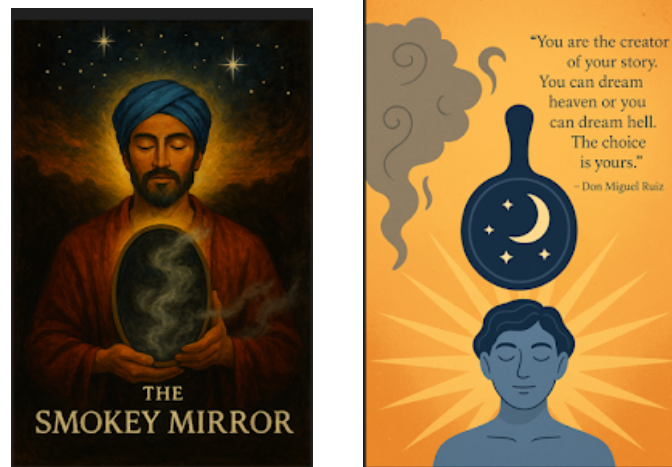
    This insight was beautifully illustrated through a story: a man, thousands of years ago, dreamed he saw himself sleeping. Under a star-filled sky, he realized, I am made of light. He named the stars tonal (the material world), the space between them nagual (the spiritual essence), and the binding force Life or Intent. He called himself the Smokey Mirror, understanding that while all matter reflects divine truth, our beliefs—the smoke—obscure it.

    So why do we suffer? Because we try to be what we are not. We chase images of perfection shaped by others, and when we inevitably fall short, we reject ourselves. The more we pretend to be something else, the more distant we grow from who we really are.

    But there’s a way out.

    Since our suffering stems from unconscious agreements, we can reclaim our freedom by breaking those rooted in fear. This frees up the personal power we’ve used to maintain them. And with that power, we can begin to dream a new dream—one grounded in self-acceptance, joy, and authenticity.

    The first step is awareness: to see the dream for what it is and question the beliefs that run our lives. Who told you you’re not enough? Whose ideal are you trying to fulfill?

    You are already complete. You are a mirror of divine light. The smoke may cloud your reflection, but the light has never left.

    As Don Miguel Ruiz wisely says:
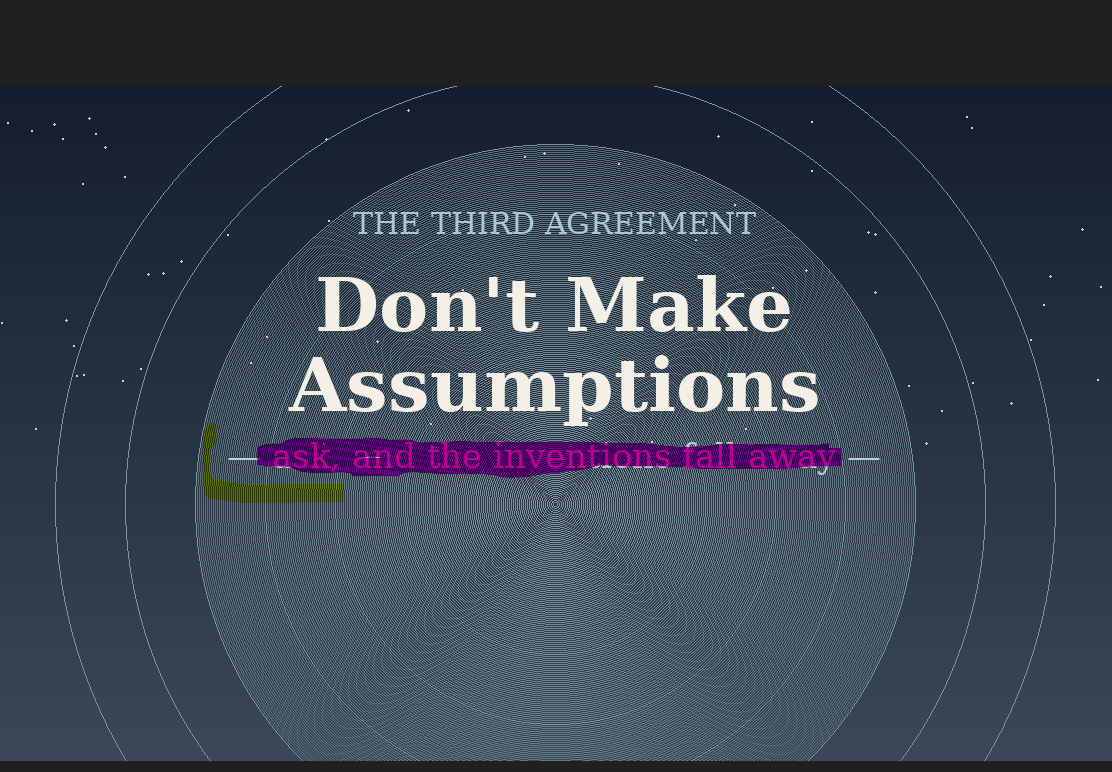
    “You are the creator of your story. You can dream heaven or you can dream hell. The choice is yours.”

    Over the next four blog posts, I’ll explore the core principles and timeless wisdom of  “The Four Agreements.”